



B
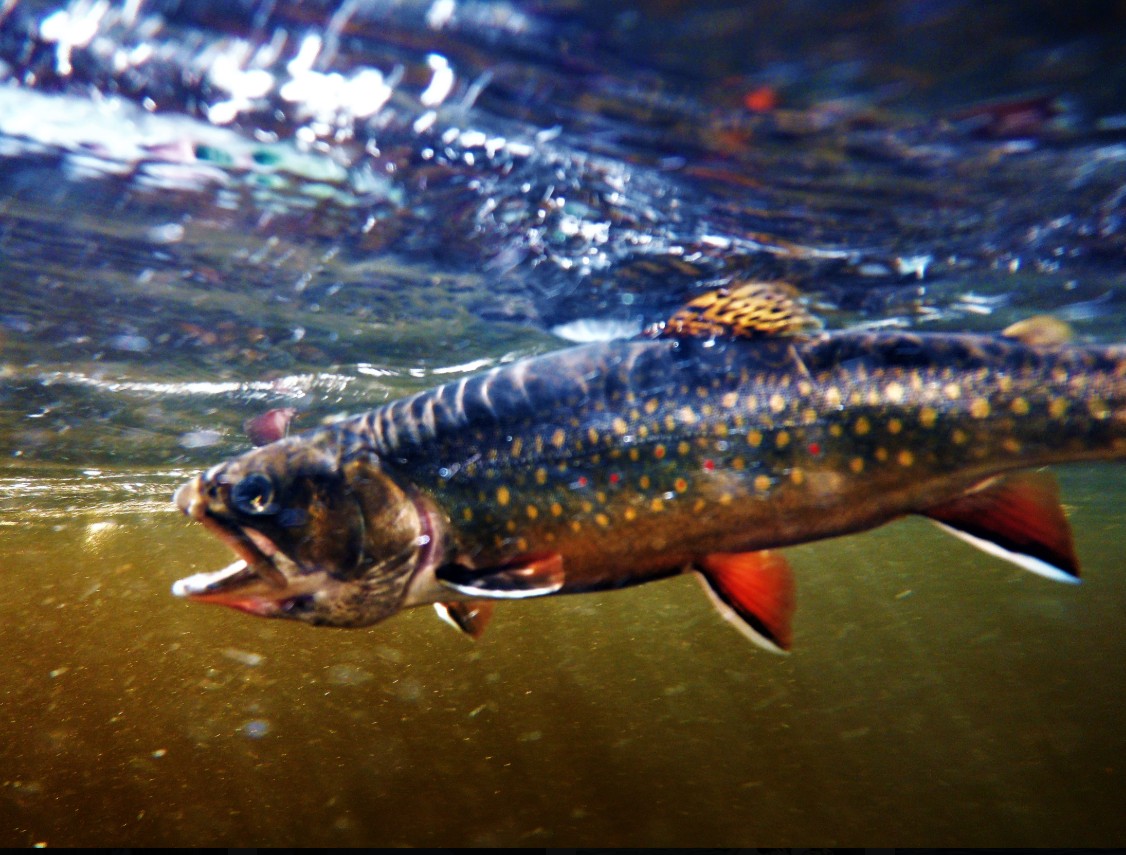
rook trout (Salvelinus fontinalis) are the only trout species native to Maine and are one of the state’s most important freshwater fish species. Also known as eastern brook trout, brookies, or squaretails, they are found throughout Maine in cold-water streams, rivers, ponds, and lakes.
B
Maine is one of the last places in the eastern United States where native brook trout populations remain widespread. The state contains some of the largest remaining areas of connected habitat for wild brook trout, including thousands of miles of cold-water streams and remote ponds that support naturally reproducing populations.
What Are Maine Brook Trout?
Brook trout are a member of the char family, which also includes lake trout and Arctic char. Despite their name, they are not technically a trout species but are more closely related to other char.
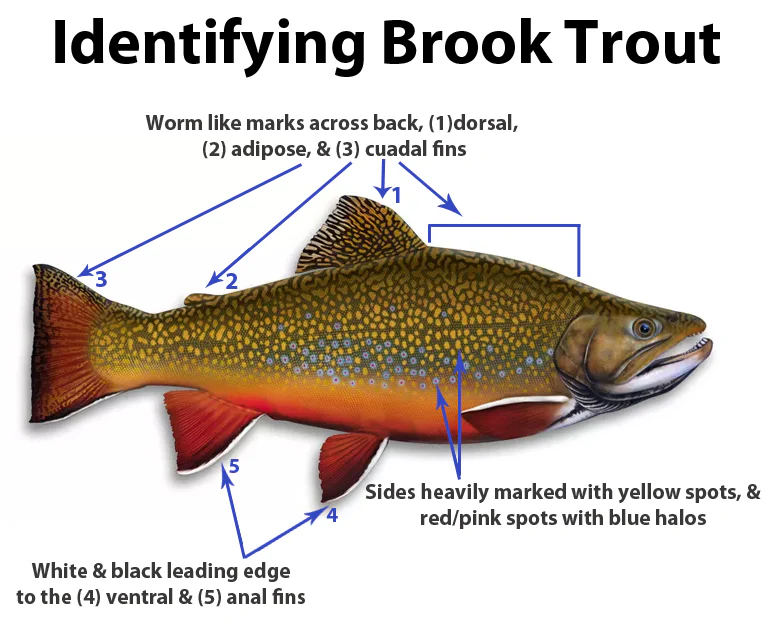
Brook trout are recognized by their distinctive appearance. They have a dark green to olive back with a marbled pattern, often called vermiculations, along their upper body. Their sides feature red spots surrounded by blue halos, and their lower fins have a white leading edge followed by a dark stripe. During spawning season, brook trout can develop more vibrant orange, red, and green coloring.
Brook trout require cold, clean water and are considered an indicator species because their presence often reflects healthy aquatic conditions. They thrive in waters that remain cool throughout the year and depend on suitable habitat for feeding, spawning, and survival.
Native Brook Trout and Wild Brook Trout
The terms native and wild are often used together when discussing Maine brook trout, but they describe different characteristics.
A native brook trout is a fish species that naturally occurs in a region without being introduced by humans. Eastern brook trout are native to Maine because they have historically lived in Maine’s waters as part of the state’s natural ecosystem.
A wild brook trout is a fish that is born and raised in the natural environment rather than produced in a hatchery. Wild brook trout can reproduce naturally and develop adaptations to the specific waters where they live.
Many of Maine’s brook trout populations are both native and wild, meaning they are descendants of the original fish populations and continue to reproduce naturally in their habitats.
Brook Trout in Aroostook County
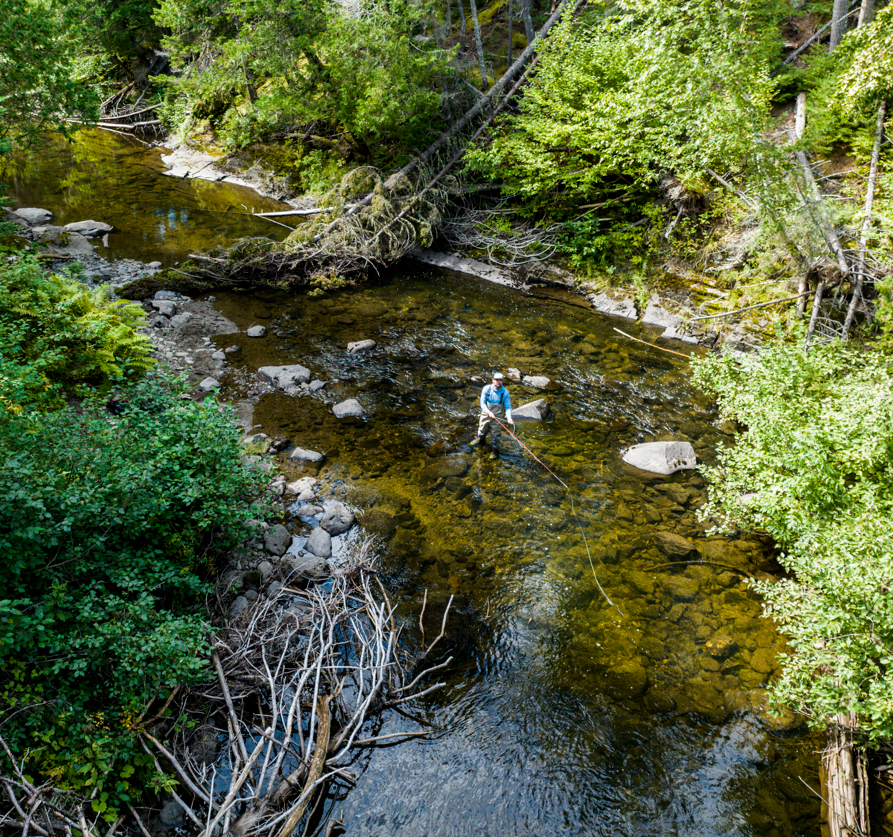
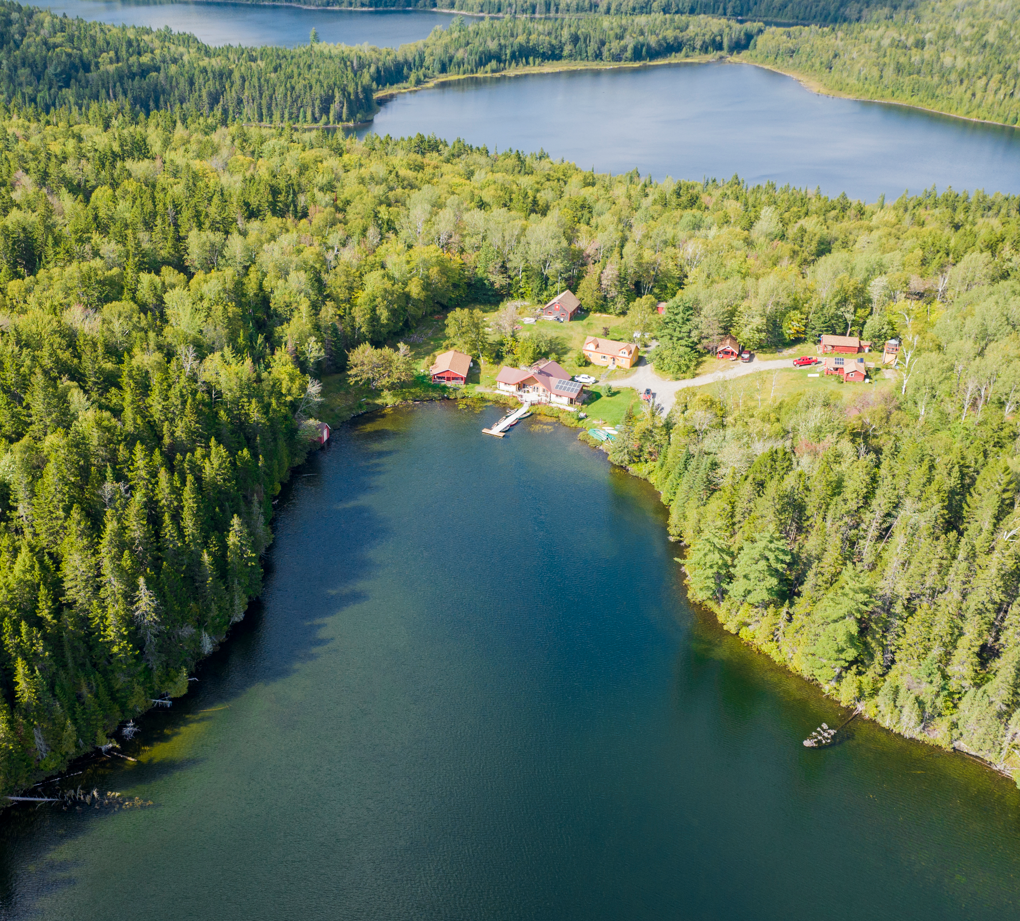
Aroostook County contains some of the largest areas of undeveloped freshwater habitat in Maine, providing important conditions for native brook trout populations. The region’s extensive forests, cold streams, remote ponds, and connected waterways support brook trout across a variety of habitats. The Deboullie Public Reserved Land has some of the most prolific trout waters in Maine. The North Maine Woods and other remote areas of northern Maine contain some of the state’s most significant brook trout waters. These habitats provide the cold, clean water conditions that brook trout need to survive and reproduce.
Conservation of Maine’s Brook Trout
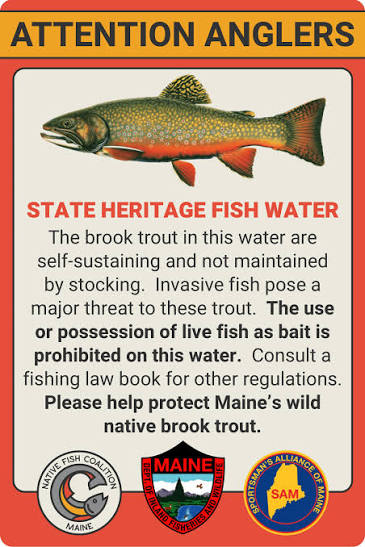
Native brook trout populations have declined throughout much of their historic range due to habitat loss, warming water temperatures, invasive species, and changes to aquatic ecosystems. Maine remains one of the most important remaining strongholds for native brook trout because of its extensive forest cover, undeveloped watersheds, and abundance of cold-water habitat.
According to the Maine Department of Inland Fisheries & Wildlife, maintaining healthy brook trout populations depends on protecting the cold, clean waters where the species feeds, grows, and reproduces. Conservation efforts focus on preserving habitat, maintaining connected waterways, and protecting the environmental conditions that allow wild brook trout populations to persist.
Organizations including Maine Audubon Brook Trout Conservation Project and Native Fish Coalition – Maine work to increase awareness and support conservation efforts for Maine’s native fish species. These efforts include protecting native brook trout habitat, promoting science-based fisheries management, and recognizing the importance of preserving naturally reproducing fish populations.
Maine’s brook trout are a valuable part of the state’s freshwater ecosystems. Protecting the forests, streams, ponds, and watersheds that support these fish is essential to maintaining healthy native populations for future generations.


Jacob Pelkey is an outdoor storyteller of ATV and snowmobile trails Maine’s Aroostook County. With eight years of experience living and exploring the region, Jacob writes about year-round adventure like Nordic skiing at the Fort Kent Outdoor center, Muskie in the St. John River, and drumming at the Mawiomi of Tribes. He is a board member of the Can Am International Dog Sled Races, Four Directions Development Corporation and Tourism Developer for Aroostook County Tourism. Jacob was recognized as an Aroostook Achiever for his work in northern Maine farmers’ markets and storytelling. He never misses maple syrup season. Start planning your trip to see the northern lights in Maine >