



L
ong before online travel guides and GPS apps helped visitors plan their adventures, Maine created a route designed to showcase the very best of the Pine Tree State. The Pine Tree Trail was a guided road trip route that connected travelers with Maine’s scenic landscapes, historic communities, and small-town character.
L
Today, the historic route is being rediscovered as one of Maine’s most unique scenic drives. Stretching approximately 500 miles from Portland to Fort Kent, Maine the Pine Tree Trail travels from coastal communities to inland towns, forests, mountains, and farming country, offering visitors a chance to experience the many different landscapes that make Maine special.
For travelers searching for Maine scenic drives, the Pine Tree Trail offers something different: a slower-paced journey through the heart of Maine where the destination is not just where you arrive, but the places you discover along the way.
The History Behind the Pine Tree Trail
The Pine Tree Trail was established by the Maine State Legislature in 1937 during the Great Depression. The goal was to create a visitor route that would encourage travelers to explore Maine and experience the state’s natural beauty, communities, and attractions.
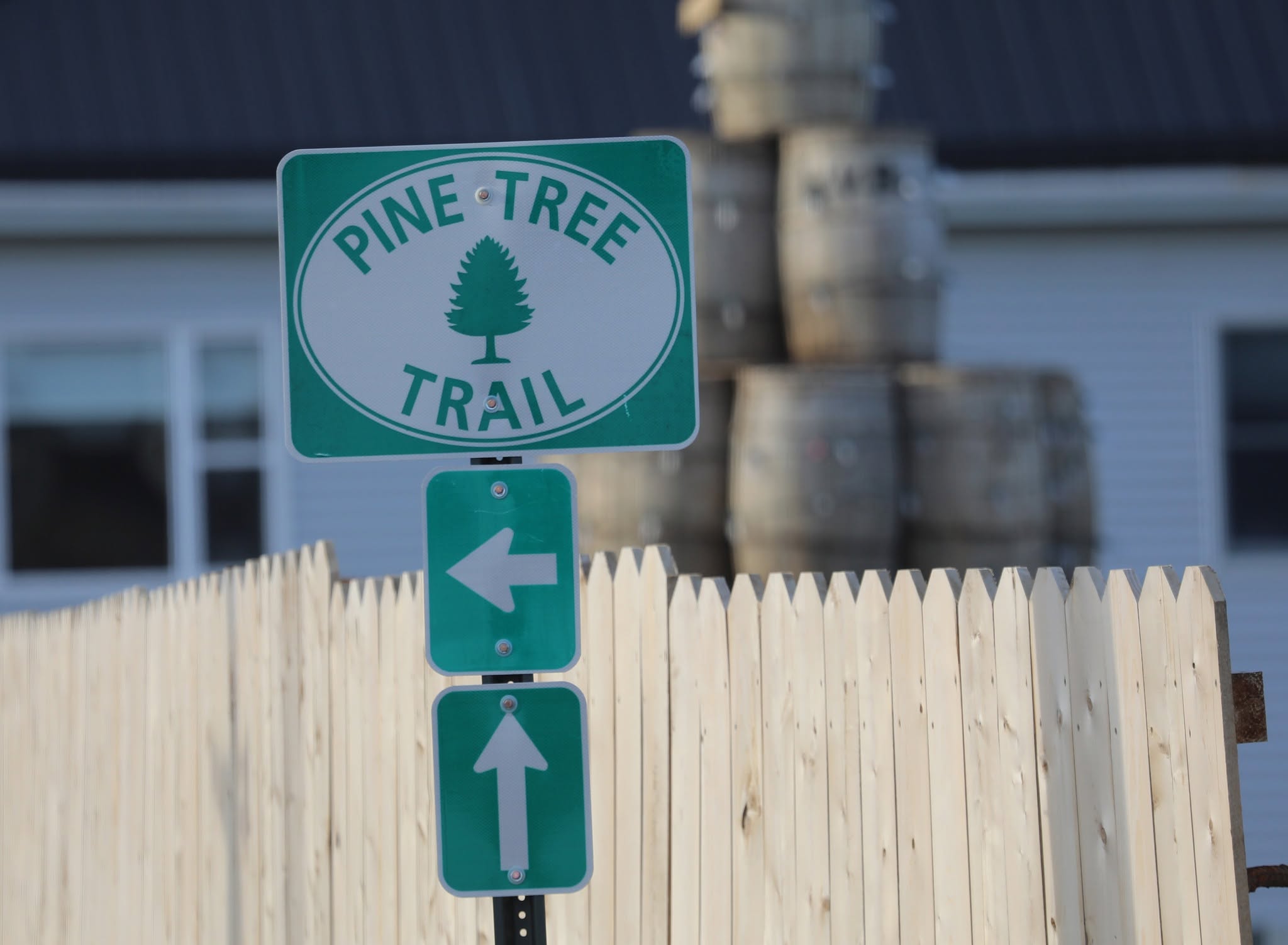
At the time, tourism was becoming increasingly important to Maine’s economy, and the Pine Tree Trail helped guide visitors through areas that showcased the state’s forests, farms, mountains, waterways, and historic towns. The route was marked with distinctive white tin hexagon signs featuring green lettering and a pine tree silhouette in the center. These signs guided travelers along the trail, creating a recognizable route through Maine.
Over time, the trail faded from public awareness as transportation patterns changed, new highways developed, and World War II shifted attention away from tourism travel. For more than 70 years, the Pine Tree Trail was largely forgotten.
In 2012, the route began its revival when Nathan Nipula discovered an old, weathered Pine Tree Trail sign. The discovery sparked renewed interest in restoring the route’s identity and helping a new generation of travelers experience this unique piece of Maine history. Today, Maine DOT-installed Pine Tree Trail signs guide travelers at intersections from Portland to Fort Kent, helping visitors rediscover a historic road trip that bypasses highways and keeps to the scenic route.

Following the Pine Tree Trail Through Aroostook County
The Aroostook County portion of the Pine Tree Trail is where travelers truly experience the character of northern Maine. It is considered the Route 66 of the east as it's a family road trip sprinkled with roadside oddities, wicked cool landmarks, and beautiful scenic turnouts. The route passes through small farming communities, Acadian villages, forest landscapes, and towns where local traditions continue to thrive.
Unlike a quick drive from one destination to another, the Pine Tree Trail is meant to be enjoyed slowly. A complete journey through Maine takes multiple days, especially if you stop to explore local landmarks, enjoy hometown restaurants, take scenic detours, and experience the communities along the way.
In Aroostook County, the trail connects visitors with some of the region’s most memorable places, including historic sites, roadside attractions, and cultural landmarks.
Roadside Treasures Along the Pine Tree Trail
One of the best parts of following the Pine Tree Trail is discovering the unexpected places along the route. From historic landmarks to quirky roadside stops, these attractions capture the personality of Maine’s communities.

Acadian Heritage in the St. John Valley
Northern Maine’s Acadian heritage is one of the defining features of the Pine Tree Trail experience. In Van Buren, visitors can stop at Acadian Village, a living history museum that preserves the stories, buildings, and traditions of the Acadian families who settled the St. John Valley. Further north, the route continues through communities where French language, food, music, and traditions remain an important part of everyday life.
Four Corners Park in Madawaska
At the northern end of the St. John Valley, Four Corners Park is a popular stop for visitors exploring the Pine Tree Trail. The park celebrates the unique geography and culture of Madawaska, where Maine meets Canada and the St. John River Valley creates a landscape unlike anywhere else in the state.
Historic Blockhouses in Fort Kent and Fort Fairfield
History comes alive along the Pine Tree Trail with two important northern Maine landmarks. Fort Kent Blockhouse and Fort Fairfield Blockhouse represent Maine’s early military history and the importance of protecting communities along the international border. These historic structures offer visitors a chance to step back into an important chapter of Maine history.
Scenic Landscapes and Outdoor Stops
The Pine Tree Trail also showcases the natural beauty of Aroostook County. Visitors can explore Aroostook State Park, Maine’s first state park, where visitors enjoy hiking, paddling, camping, and scenic views of Echo Lake and Quoggy Jo Mountain. Travelers will also pass through some of the most productive agricultural regions in Maine, where potato fields stretch across the landscape and farming remains an important part of community life.
Unique Small-Town USA Attractions
Part of the fun of the Pine Tree Trail is finding the unexpected stops along the way.
Aroostook County visitors can look for:
- T Caribou statue celebrating the community’s history.
- The Mars Hill potato barrel tree on Main Street.
- Mount Carmel in Grand Isle.
- The Maine Tribute Moose in Van Buren.
- The Molunkus Hermit billboard in Molunkus.
- Houlton’s famous Boy and the Boot statue.
These landmarks turn an ordinary drive into a road trip adventure that has you excited for every stop.
A Road Trip Through Authentic Maine
The Pine Tree Trail represents a different way to experience Maine. Instead of rushing between major destinations, travelers are encouraged to slow down and enjoy the communities, landscapes, and people along the way.
The route is ideal for:
- Family road trips.
- Motorcycle touring.
- Scenic drives.
- Photography trips.
- Fall foliage adventures.
- Travelers looking for authentic Maine experiences.
In 2025, cyclist Jeremy Chapman completed the entire Pine Tree Trail by bicycle, demonstrating that the route can be experienced in many different ways. Whether traveling by car, motorcycle, or bicycle, the trail offers opportunities to connect with Maine beyond the traditional tourist stops.
Plan Your Pine Tree Trail Adventure
The Pine Tree Trail is best enjoyed as a multi-day journey. Travelers should plan time to stop, explore, eat at local restaurants, visit attractions, and enjoy the scenery rather than simply following the route from beginning to end.
The trail pairs especially well with northern Maine adventures, including the St. John Valley/Fish River National Scenic Byway, Acadian heritage sites, outdoor recreation destinations, and small communities throughout northern Maine. For visitors searching for Maine scenic drives, the Pine Tree Trail offers a unique opportunity to experience the state from its largest cities to its smallest rural communities.
Follow the official Pine Tree Trail route, watch for the white hexagon signs with the green pine tree symbol, and enjoy a journey through the landscapes and stories that make Maine unforgettable.
Continue to explore the Pine Tree Trail online at www.PineTreeTrail.com
Common Questions About the Pine Tree Trail
1) What is the Pine Tree Trail?
The Pine Tree Trail is a historic 500-mile scenic driving route through Maine that connects communities from Portland to Fort Kent, Maine. The route was created to guide visitors through Maine’s landscapes, historic sites, and small towns while showcasing the state’s natural beauty and cultural heritage.
2) When was the Pine Tree Trail created?
The Pine Tree Trail was established by the Maine State Legislature in 1937 as a visitor route designed to showcase Maine and encourage travel throughout the state. The route was later forgotten before being revived in the 2010s.
3) Why was the Pine Tree Trail forgotten?
The Pine Tree Trail faded from public awareness after World War II and as transportation patterns changed. The original signs were removed from roadways as the metal was needed for the war efforts. The route was rediscovered in 2012 after an old Pine Tree Trail sign was found, leading to efforts to restore the trail’s identity. There are only two of the original signs known to exist.
4) What are the best stops on the Pine Tree Trail in Aroostook County?
Popular Aroostook County stops include Acadian Village in Van Buren, Four Corners Park in Madawaska, the Fort Kent and Fort Fairfield Blockhouses, Aroostook State Park in Presque Isle, the bronze caribou statue, Mars Hill’s potato barrel tree, and other unique roadside attractions.
5) How long does it take to travel the Pine Tree Trail?
The full Pine Tree Trail covers approximately 500 miles and is best experienced over multiple days. Travelers should allow extra time to explore communities, attractions, restaurants, and scenic areas along the route. The maximum speed limit on the route is 55 MPH and in some places it is only 25 MPH. There are no highway or interstate miles in this scenic drive.
6) Where can I find a map of the Pine Tree Trail?
View Digital Map: Travelers can find digital route information and the map through the official Pine Tree Trail website www.pinetreetrail.com.
Get Printed Map: The Official State of Maine Highway Map is the best printed map that highlighted the route. Free, printed copies can be picked up at all eight State of Maine Visitor Information Centers.
7) Is the Pine Tree Trail one of Maine’s best scenic drives?
Yes. The Pine Tree Trail is one of Maine’s unique scenic drives because it connects travelers with the full character of the state, from coastal communities to mountain landscapes, forests, farming regions, and historic small towns.


Jacob Pelkey is an outdoor storyteller of ATV and snowmobile trails Maine’s Aroostook County. With eight years of experience living and exploring the region, Jacob writes about year-round adventure like Nordic skiing at the Fort Kent Outdoor center, Muskie in the St. John River, and drumming at the Mawiomi of Tribes. He is a board member of the Can Am International Dog Sled Races, Four Directions Development Corporation and Tourism Developer for Aroostook County Tourism. Jacob was recognized as an Aroostook Achiever for his work in northern Maine farmers’ markets and storytelling. He never misses maple syrup season. Start planning your trip to see the northern lights in Maine >