

M
uskellunge (Esox masquinongy), better known as muskie, are big, powerful freshwater predators with sharp teeth and a reputation for making anglers work for every fish. In Maine, there is one region where fishermen specifically travel to pursue them: the St. John River system of Maine's Aroostook County. The Maine Department of Inland Fisheries and Wildlife classifies muskellunge as an introduced species and identifies them by the common names Muskie and Muskellunge.
M
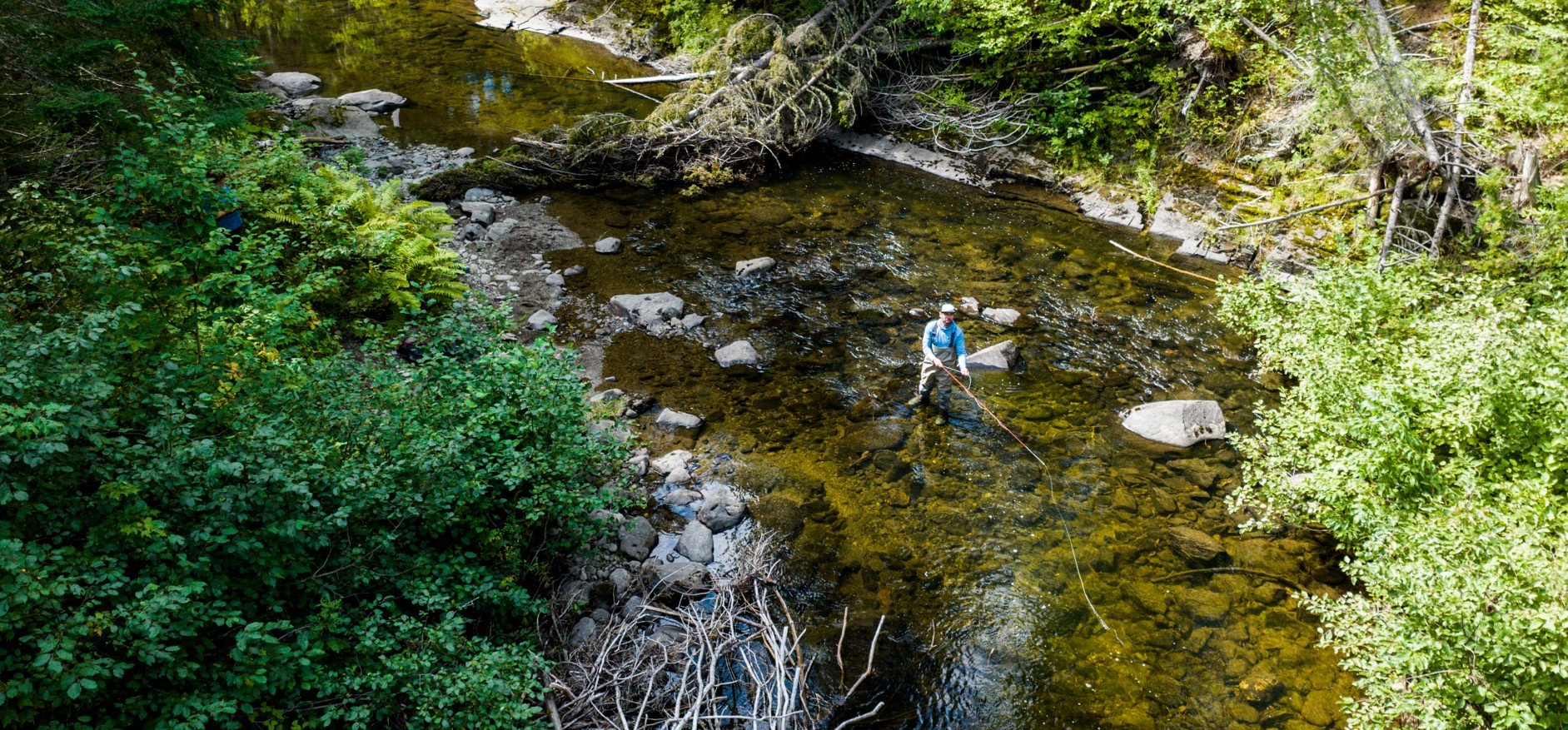
For anglers interested in Maine muskie fishing, this is a very different trip from casting a fly into one of Aroostook County's native brook trout streams. Muskie fishermen come prepared with heavy rods, big lures and equipment capable of handling a large predator. The reward is the possibility of hooking into one of the most formidable freshwater sport fish found in Maine.
How Did Muskie Get to Maine?
Muskie are not native to Maine. Their story in Aroostook began when muskellunge were introduced into Lac-Frontière in Quebec in1970. From those headwaters, the fish moved downstream into the St. John River watershed and established a reproducing population.
That distinction matters in Aroostook. Maine is nationally known for its wild native brook trout, and fishermen understandably have concerns about introduced predators reaching important trout waters. The Maine muskie fishery is associated with the St. John River drainage rather than the lakes and ponds of the Fish River Chain of Lakes or central Aroostook or southern Aroostook. Due to a series of dams, muskie are locked into the St. John River.
If your goal is native Maine brook trout or landlocked salmon, Aroostook County has an enormous amount of water to explore beyond the muskie fishery. If you're specifically coming north looking for muskie in Maine, however, point the truck toward the St. John.

Fishing the St. John River for Muskie
The St. John River crosses Aroostook County before forming the international boundary between Maine and New Brunswick from St. Francis downstream through communities including Fort Kent, Frenchville, Madawaska, Grand Isle and Van Buren. Public boat landings make much of this stretch surprisingly accessible. Depending on where you plan to fish, launches can be found in several St. John Valley communities, including:
· Van Buren: Bridge Street - Map it now
· Grand Isle: Traverse Street - Map it now
· Madawaska: Public Works Avenue - Map it now
· Frenchville: U.S. Route 1 - Map it now
· Fort Kent: Dufour Street - Map it now
· St. Francis: Main Street - Map it now
Public boat landings generally provide paved parking lots and ramps, trash receptacles and signage with information or localized warnings. Read the signs at the launch before putting your boat in the water. Remember that much of the St. John is international water. Check the current rules before your trip rather than relying on last year's information. Unfamiliar with fishing in Maine's international waters? Please take the time to review Maine international water fishing rules.
Come Prepared for Muskie Fishing
Someone who regularly fishes for brook trout may have a favorite lightweight rod that has accompanied them for years. Leave it in the truck for this one.
Serious muskie fishing in Maine requires equipment designed to cast large lures and control a powerful fish. Heavy, fast-action casting rods paired with durable baitcasting reels are common, along with heavy braided line and strong fluorocarbon or steel leaders that can withstand a muskie's teeth.
Your tackle box is going to look a little different, too. Large bucktail spinners create vibration in stained water, while oversized crankbaits and minnow-style baits can be worked at different depths. Topwater lures add another dimension during periods when fish are actively feeding near the surface. Muskie often relate to weed edges, current breaks, submerged wood and rocky structure, so knowing how to read the river can be as important as having the right lure.
This is also one trip where local knowledge is worth seeking out. Outdoor sporting-goods stores throughout the St. John Valley know the fishery and can help visiting anglers find appropriate tackle, lures and bait. A Registered Maine Guide can be especially valuable for a first muskie trip, helping shorten the learning curve on a large river.
The Fish of 10,000 Casts
Muskie have earned the famous nickname "the fish of 10,000 casts." That tells you something about the attitude required.
A successful day does not necessarily mean putting several fish in the boat. A muskie may follow a lure toward the boat without striking, disappear beneath the surface or suddenly attack when an angler least expects it. That unpredictability is exactly what keeps dedicated muskie fishermen coming back.
Muskellunge commonly grow to lengths of 30 to 36 inches and weights of 5 to 10 pounds, with occasional larger individuals. Females attain larger sizes than males. The largest muskellunge recorded in Maine weighed 33 pounds and measured 48" long. These aren't fish you casually stumble into while spending an afternoon trout fishing. Maine muskie fishing is a pursuit of its own, and fishermen who become hooked on it tend to become serious about their equipment, technique and understanding of the water.
International Muskie Derby
Each August, that enthusiasm becomes especially visible during the International Muskie Derby, headquartered in Fort Kent.

The event extends beyond Fort Kent itself, with anglers fishing the St. John Valley in search of their biggest catch. Boats arrive, fishermen compare stories and the communities along the river fill with people who have come specifically to chase muskie. The largest muskie ever caught in the history of the Fort Kent International Muskie Derby was 27.75 lbs caught by Bobby Bolduc of Quebec in August 2024. For someone planning a dedicated muskie fishing Maine trip, derby weekend is an opportunity to experience the culture that has grown around this unusual northern Maine fishery. Another time to consider coming would be Free Fishing Weekend is a weekend in June that it is not required to have a Maine fishing license.
Can You Catch Muskie Through the Ice?
Yes, muskellunge can also be caught during Maine's winter fishing season where the water is legally open to ice fishing, but check the regulations for the exact water before drilling a hole. Maine's North Zone regulations and special fishing laws vary considerably by water.

Winter anglers targeting muskie also need to think bigger. That includes cutting a hole large enough to safely bring a large fish through the ice and carrying equipment appropriate for handling one. The Maine Department of Inland Fisheries and Wildlife updates its fishing rules annually. Check current Maine fishing laws or use the online angling tool for water-specific regulations.
A Different Kind of Maine Fishing Trip
Aroostook County remains brook trout country. Cold streams, remote ponds and healthy native trout populations have brought sportsmen north for generations, and for many first-time visitors, brook trout or landlocked salmon are still the natural introduction to fishing The County.
Muskie offer something completely different. They're big, aggressive and difficult enough to make experienced fishermen work for them. They require specialized equipment, patience and an understanding of the St. John River system. And that challenge has created a dedicated fishing culture of its own along Maine's northern border.
If you've been searching for muskie in Maine, don't cast randomly across the map. Head north to the St. John Valley, stop at a local sporting-goods store, talk with fishermen who know the river and come prepared for a fish that might make you earn every cast.
Fishing Resources
- Buy A Maine Fishing license
- Species Information: Muskellunge
- Maine Fishing Laws and Rules
- Maine International Water Fishing Rules
- Maine Online Angling Tool

Common Questions
Where can you fish for muskie in Maine?
For Maine muskie fishing, head to the St. John River system in northern Aroostook County. Public access along the St. John Valley makes communities including Fort Kent, Frenchville, Madawaska, Grand Isle, Van Buren and St. Francis useful starting points for a fishing trip. Muskie are associated with this St. John River system, not the brook trout lakes and streams found throughout the rest of Aroostook County.
Are muskellunge native to Maine?
No. Muskellunge (Esox masquinongy) are an introduced species in Maine. They entered the St. John River watershed after being introduced to Lac-Frontière in Quebec and eventually established a self-sustaining population downstream. This distinction is important in Aroostook County, where native Maine brook trout fisheries are highly valued and anglers sometimes worry about muskie spreading into other waters.
What should I bring for muskie fishing in Maine?
Muskie fishing requires heavier equipment than most freshwater fishing in Maine. Anglers typically use heavy casting rods, durable baitcasting reels, heavy braided line and strong fluorocarbon or steel leaders capable of handling a large fish with sharp teeth. Large bucktails, crankbaits, minnow baits and topwater lures are common choices. If this is your first muskie fishing Maine trip, stop at a sporting-goods store in the St. John Valley for local lure recommendations or consider fishing with a Registered Maine Guide.
What is the Fort Kent International Muskie Derby?
The Fort Kent International Muskie Derby is held each August and is headquartered in Fort Kent, but the fishing extends throughout the St. John Valley. There are large prizes and a cash purse. Historically the fishing derby has been held for three days and there are several weigh in stations along the St. John River rather than just one location. The event has become one of the signature celebrations of the region's muskie fishery, bringing serious anglers to the St. John River in search of large fish while communities throughout the valley welcome competitors and visitors.
Do I need a Maine fishing license to fish for muskie?
Yes, anglers fishing from the Maine side should have a valid Maine fishing license and review current Maine fishing regulations before heading onto the water. Portions of the St. John River form the international boundary between Maine and New Brunswick, so anglers should also check current rules for the particular section of river they intend to fish. Buy a Maine fishing license now
Can you catch muskie through the ice?
Yes, muskie can be caught through the ice where the water is legally open to ice fishing. Check the water-specific regulations before heading out, bring equipment capable of handling a very large fish and make sure your fishing hole is cut large enough to actually get a muskie through the ice. Learn more about ice fishing now

Jacob Pelkey is an outdoor storyteller of ATV and snowmobile trails Maine’s Aroostook County. With eight years of experience living and exploring the region, Jacob writes about year-round adventure like Nordic skiing at the Fort Kent Outdoor center, Muskie in the St. John River, and drumming at the Mawiomi of Tribes. He is a board member of the Can Am International Dog Sled Races, Four Directions Development Corporation and Tourism Developer for Aroostook County Tourism. Jacob was recognized as an Aroostook Achiever for his work in northern Maine farmers’ markets and storytelling. He never misses maple syrup season. Start planning your trip to see the northern lights in Maine >